Growing a Fashion Brand in 2027: What the runways just told us
The Spring/Summer 2027 runways in New York and London pointed the same way. Here is what that means for your brand in 2027.
What stood out SS27 season was not one particular trend, colour or silhouette. It was the way brands are responding to a customer who has become much more selective about where their money goes.
Three years ago, the luxury industry had around 400 million customers. By the end of 2025, Bain and Altagamma counted about 340 million, with another 20 to 30 million expected to leave.
This summer, Bain asked the people who had left whether they intended to come back. More than seven in ten said they did. The interesting question, then, is where those customers will choose to spend when they return. They will not necessarily go back to the brands they left, which creates an opportunity for brands that can give them a compelling reason to choose differently.
I went through the New York and London coverage of the SS27 shows with that in mind. For an indie brand, none of this means you need to start behaving like a luxury conglomerate. It does mean that some of the assumptions you built your business around a few years ago may deserve another look.
The shows offered a few useful signals about what customers may be responding to next, from the renewed focus on value and the growing role of resale to the return of physical experiences and the importance of understanding who actually drives your sales. These are the shifts I would be paying attention to as you plan for 2027.
1. Fashion is having another conversation about value
New York was noticeably less interested in spectacle.
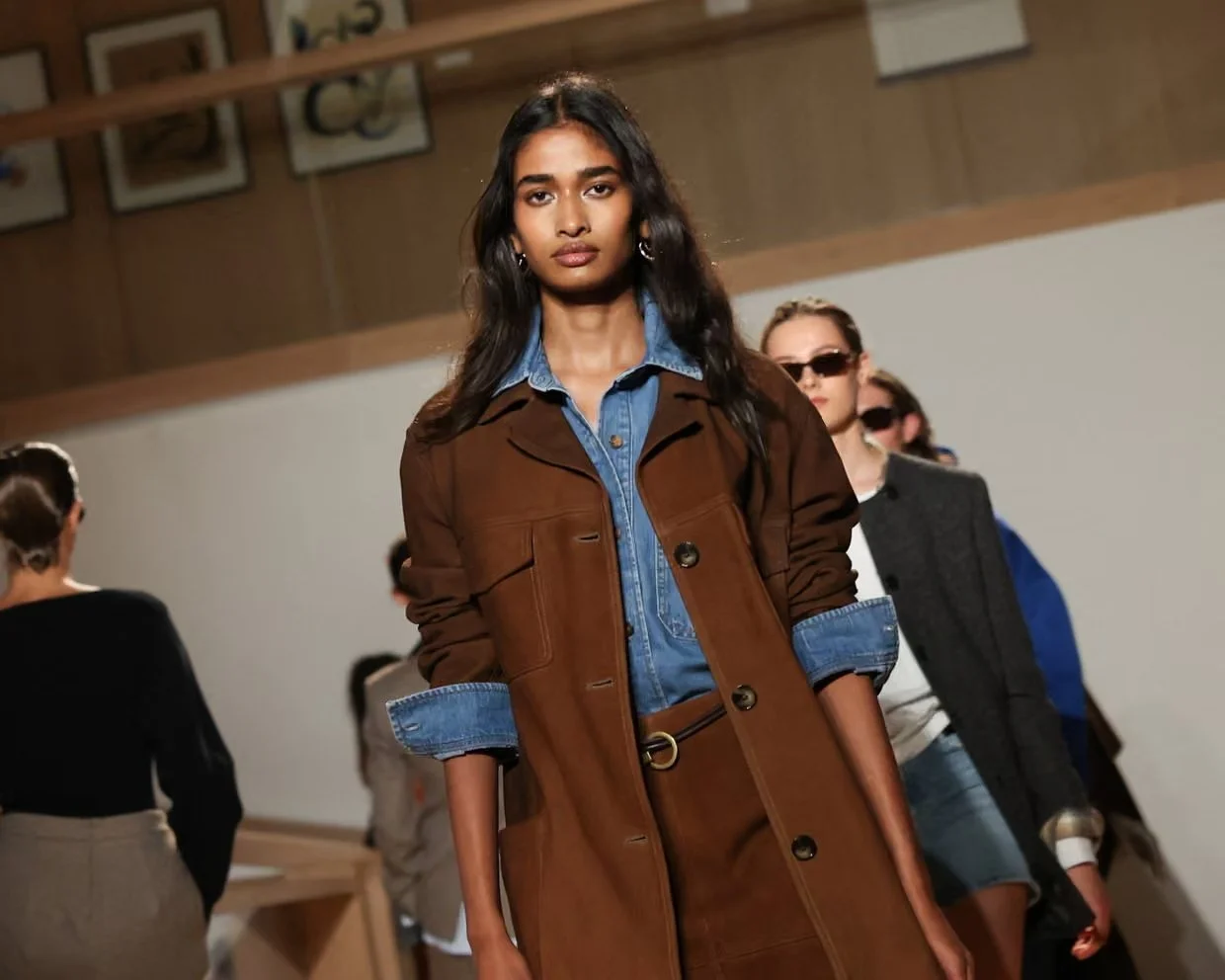
Marks and Spencer’s first LFW catwalk gamble pays off with compelling looks at affordable prices // Photograph: Katie Collins/Reuters
Glossy's editors noted fewer outlandish looks and fewer sky-high prices than in previous seasons, with more everyday product appearing on the runway, including graphic tees at Campillo and denim at Retrofête.
London made the shift even more obvious.
Marks & Spencer joined the official schedule for the first time, presenting 57 looks that went on sale immediately after the show. Half were priced below £50.
At the luxury end, the same conversation is happening at a much higher price point.
Kering CEO Luca de Meo has acknowledged that the group went too far with pricing in some categories, while Gucci has reduced prices on selected products. Its sales decline narrowed to 2% in the second quarter, from 8% in the first.
That does not mean lower prices have solved Gucci's problem. Bernstein analyst Luca Solca has argued that the question is still whether the brand can rebuild desirability.
And jewellery is making the comparison particularly clear.
LVMH's watches and jewellery division grew 11% in the second quarter, while fashion and leather goods grew 1%. Kering's jewellery division grew 18%, while fashion was flat.
Solca's explanation is revealing: when a handbag has become dramatically more expensive since 2019, an entry-price piece of jewellery can start to look like the better value proposition.
The same calculation happens at a much smaller scale.
Your customer may never compare your $300 bag with a luxury brand bag. But they are comparing your $300 bag with everything else they could spend $300 on.
That makes the price ladder worth revisiting.
The answer doesn't necessarily have to be a lower price. It could be better materials, more distinctive design, stronger craftsmanship, better service or a product that solves a problem the cheaper version does not. The important thing is that the difference is visible, while maintaining healthy margin.
2. Secondhand is officially entering the fashion game
At New York Fashion Week, Tanner Fletcher showed its collection alongside carefully sourced vintage. Sanderlak mixed pieces from its own earlier seasons into the new collection, while eBay brought archive pieces from designers including Willy Chavarria.
It was a useful reminder that customers do not necessarily think about fashion in the neat categories that brands do. For shoppers, new collections, vintage, archive pieces and secondhand products increasingly sit within the same consideration set. They are all competing for space in the same wardrobe and, increasingly, for the same share of the customer's budget.
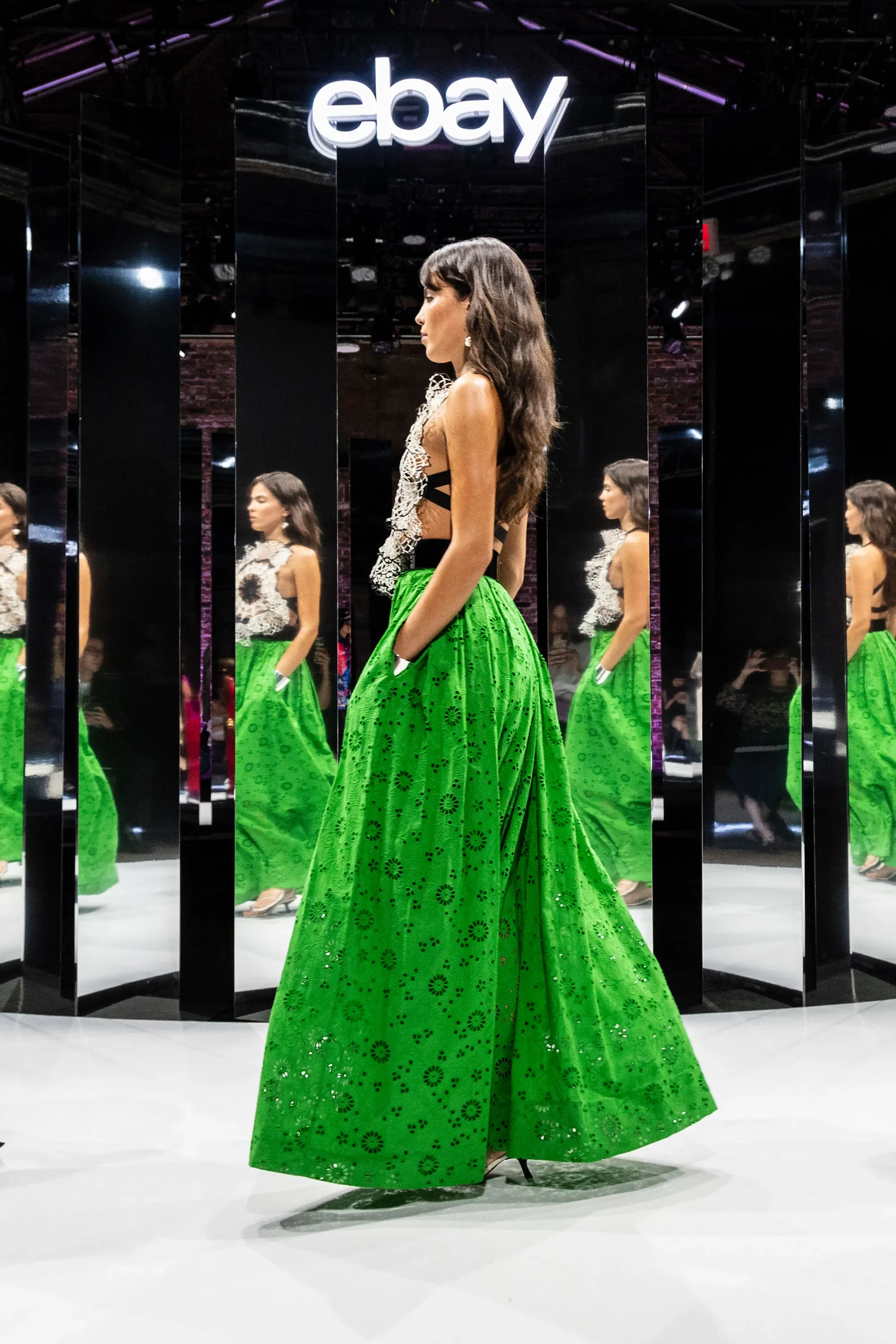
Ebay is showing secondhand fashion on the runway // Photo: Courtesy of Ebay
Bain's numbers point in the same direction. Around half of luxury shoppers now check the secondhand market before buying new, while online searches for vintage bags have more than doubled year on year.
In London, eBay's live "Endless Runway" show attracted more than 300 viewers in the app, with some pieces selling out while the stream was still running.
For an indie brand, resale can look like someone else's business, but the moment your first customer sells your product, your brand enters a secondary market whether you have planned for it or not.
That market can also tell you something useful about the strength of your product. If last season's $600 bag consistently changes hands for $450, that is a very different signal from one that struggles to sell for $150. A product that remains desirable several years after its original purchase has a very different commercial life from one that loses most of its value as soon as a new collection arrives.
It also changes the way you should think about product development. A well-made piece that remains desirable for five years is economically different from one that feels dated after one season. Durability, repairability and timelessness may not be the most exciting words in a collection planning meeting, but they can become part of the value proposition when customers are increasingly thinking about what happens after the initial purchase.
You do not necessarily need to launch your own resale platform. You could start by understanding what is already happening. Search your brand on resale platforms and look at which products appear most often. Check what they actually sell for rather than simply looking at asking prices, and pay attention to which styles retain their value. If customers are asking for repairs, replacement parts or restoration, that is useful information too.
These behaviours tell you something about how customers perceive the product after the marketing has disappeared and they are making the decision for themselves.
For 2027, I would treat the second life of a product as part of its commercial story rather than something that happens after your relationship with the customer ends.
3. The physical experience is making a comeback
This trend was expected. People want connection and somatic experiences. This season, another noticeable shift across the shows was the effort put into the experience around the product. Theory featured the designer's voice describing each look as it came down the runway, while other brands staged presentations in their own workshops and studios.
Bain has found that consumer sentiment towards experiences is growing around 1.5 times faster than sentiment towards goods. There is also a practical reason brands are looking for new ways to meet customers: discovery itself is changing.
At a recent Glossy and Modern Retail dinner, marketers discussed how search and display advertising are becoming harder to rely on as shoppers increasingly use AI to find products. Bain reports that around half of luxury shoppers already use AI somewhere in their buying journey, with roughly a quarter using it for product discovery.
For a smaller brand, that raises an interesting question. If someone asks an AI tool to find them a handbag, how easily can that tool understand why your handbag should be considered? Clear product information, consistent naming, detailed descriptions, reviews and credible third-party coverage all become more important when part of the discovery process happens outside the brand's own website.
At the same time, the shift towards digital discovery makes physical relationships more valuable. An emergin brand can create something that a global company cannot easily reproduce at the same scale: a direct relationship with its customers.
A founder hosting a small group in a studio, inviting existing customers to a private preview, organising a dinner or opening the workshop for an afternoon can create a level of familiarity that is difficult to achieve through another digital impression.
The important part is that these activities should be commercially sustainable. An event that costs $10,000 and generates a handful of sales may create beautiful content, but it is difficult to build a business around. A smaller event that can be repeated throughout the year may look less impressive while creating much more useful relationships.
For an indie brand, I would therefore think less about creating a single large moment and more about building a physical experience that can become part of the rhythm of the business.
4. Your most important customers may be hiding in your customer list
There is another number worth paying attention to. Net-a-Porter and Mr Porter reported that their top 4.3% of customers, roughly 35,000 people, generated 49.1% of their combined sales value in fiscal 2026.
Their active customer base fell 11.1% over the year, yet sales still grew 5.6% excluding currency. In the US, sales grew 15.1%, driven largely by winning back lapsed customers and increasing spend among top customers.
The scale is obviously different from an indie brand, but the principle is useful.
Most founders know their "ideal customer" in demographic terms. They know the age, location and occupation, and perhaps what they imagine that person reads, wears and follows online. Far fewer know exactly which customers generate half of their revenue.
That is a much more useful customer profile.
If you rank your customers by total spend, you may discover that a surprisingly small group is responsible for a large proportion of your sales. You can then look at what those customers actually buy, how often they return, whether they purchase at full price and how long it has been since their last order.
This can change the way you think about growth. If your most valuable customers are already buying multiple times a year, your opportunity may be to deepen those relationships. If they tend to make one large purchase and disappear, the problem may be retention. If they buy only certain products, that may tell you where your strongest product-market fit actually sits.
You may even discover that your next stage of growth does not require as many new customers as you assumed.
That does not mean acquisition stops mattering. It means that acquisition should be considered alongside the economics of retention. Bringing in another customer at a high acquisition cost only to make one low-margin purchase is a very different proposition from acquiring someone who stays with the brand for several years.
Before setting your 2027 acquisition budget, assess your current revenue concentration and observe what your highest-value customers are telling you through their behavior.
Tracking metrics like Lifetime Value (LTV) and Customer Retention Rate (CRR) in your CRM will give you the baseline data needed to deploy acquisition capital efficiently.
So, what does it all mean for an indie fashion brand?
Taken together, the signals from New York and London suggest that fashion is entering another period in which customers are becoming more deliberate about what deserves their money.
That has implications well beyond the runway.
If customers are questioning value, your price architecture matters. If they are moving more freely between new and secondhand, the longevity and resale value of your products matter. If discovery is moving towards AI and brands are investing more heavily in experiences, the way customers find and relate to your brand matters. And if a small percentage of customers can generate a significant proportion of revenue, understanding those customers matters more than ever.
None of this requires an indie brand to copy what the biggest fashion companies are doing. In fact, the economics often make the opposite approach more sensible.
An emerging brand can revisit its product range before committing to another collection. It can test a new category through a limited release or pre-order instead of investing heavily in inventory. It can invite its best customers into the studio rather than spending heavily on a large event. It can look at resale platforms for information about product desirability that would be difficult to gather through conventional market research.
Tanner Fletcher is an interesting example of the value of testing demand. The brand launched bridal as a one-off in 2024, and it now reportedly accounts for around half of the business. The founders did not have to know in advance that bridal would become such a significant part of the company. They created an opportunity to test it and allowed the demand to inform what happened next.
That is probably the most useful way for an indie founder to think about the signals coming from the runway. The purpose is not to predict exactly what fashion will look like in 2027. It is to identify the changes in customer behaviour that could affect your own business and then test what they mean for you.
Before setting next year's revenue target, I would therefore look at your price architecture, customer concentration, product margins, inventory requirements and cash cycle. I would also look at what your customers are doing after they buy from you, whether they return, resell, recommend or simply disappear.
These are not particularly glamorous questions, but they determine whether growth actually makes the business stronger.
Milan and Paris are still to come. We’ll see, maybe they will add something to the “to-do” list to secure growth in 2027.
Want to know what is really driving your brand's growth?
Revenue can tell you whether you are growing. It cannot tell you whether that growth is healthy.
Get a clearer view of what is working, what is holding your brand back, and where to focus next.
or contact us