Meta's AI Agent: The Salesperson You Didn't Hire
What Meta's AI agent means for the future of fashion, and what to check before Black November
If you sell online to customers in North America, an AI agent can now buy from your store on a customer's behalf. On Shopify, it does so through a built-in checkout that was switched on by default. AI is already a strong sales channel, replacing traditional internet search. But this is certainly a new level.
The agent is Muse, the personal assistant Meta launched in the United States on 8 September. Within two weeks it had become the week's most talked-about retail story, for reasons that have little to do with its features. On Sunday 20 September, Amazon blocked it. On Monday 21 September, Shopify did the opposite and opened every store on its platform to it.
It is tempting to file this under tech news, but it definitely belongs on a fashion founder's desk. The week's events are an early sign of how customers will find and buy clothes over the next decade, and of which brands that shift will reward. They also land eight weeks before Black Friday on 27 November. Below I'll explain what changed, what it signals for the industry, and the short audit every brand selling online should run before November.
What is Muse AI
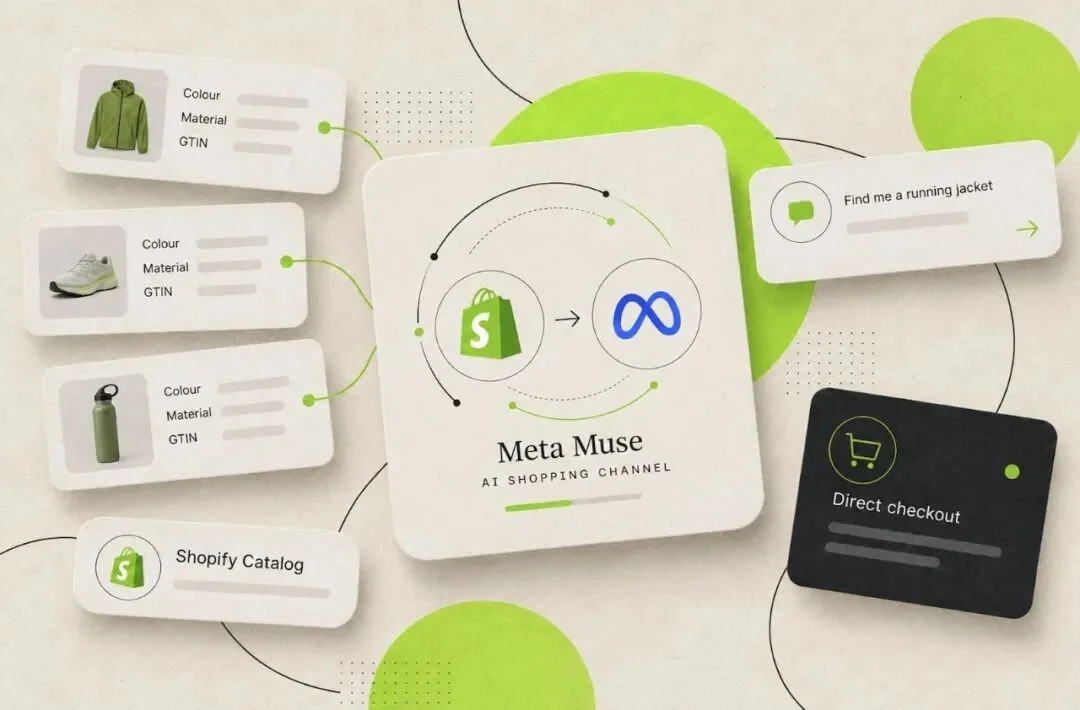
Shopify actively supports access to the Muse application | Image source: Naughton&Bird
Muse is not a chatbot in the usual sense. Users give it a goal, and it carries out the steps: it sends emails, books travel, fills in forms and buys things. It runs in the Muse app, on the web and inside WhatsApp. It is free for most use, with paid tiers at $20 and $100 a month, and it overtook ChatGPT as the most downloaded free iPhone app in the US within ten days of launch.
Recent news and discussions
Two weeks after launch, Muse found itself at the centre of a very public disagreement. Amazon blocked it, arguing that Meta never asked permission and that the agent shopped without identifying itself, which Meta disputes. Behind the argument is money: Amazon earns billions from shoppers scrolling past sponsored listings, and an agent never sees an ad. A day later, Shopify took the opposite side and opened all its stores to Muse. It earns from payment processing, so every order pays it, whoever places it. For fashion founders, this is more than a quarrel between tech giants. It decides where AI shoppers can spend their money, and right now the answer includes your store.
Why it matters to you
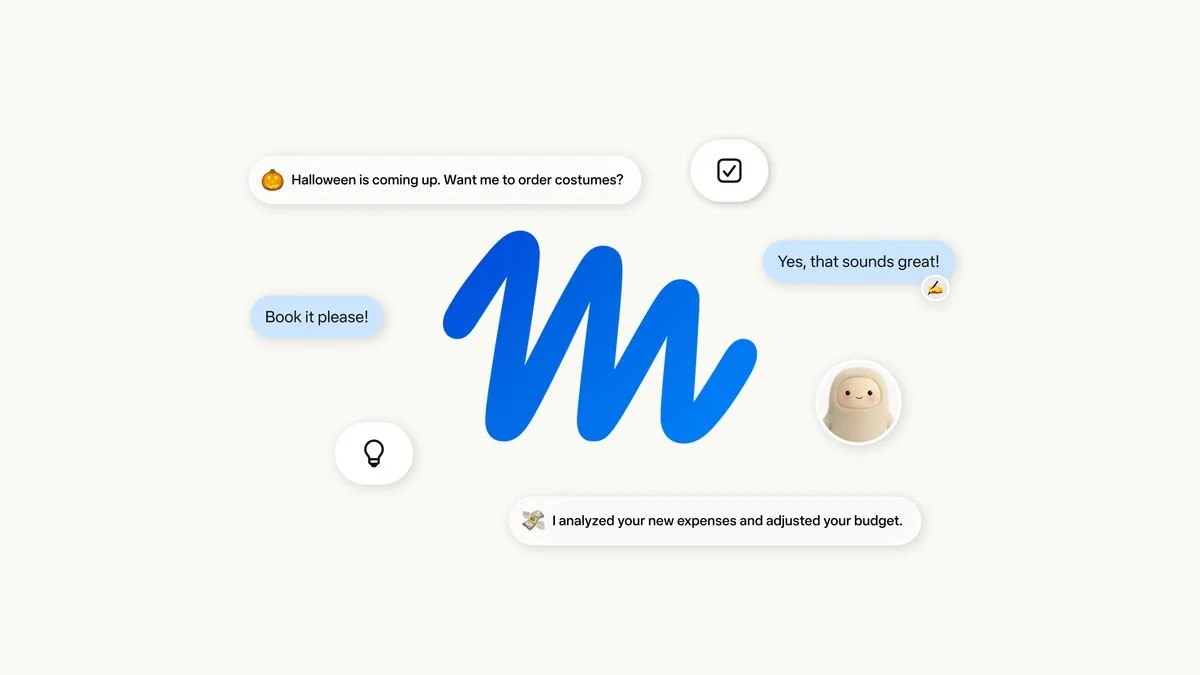
Meta's newly launched personal AI assistant Muse has gone viral recently | Image source: Meta
A Muse user cannot buy on Amazon, so the agent sends them to open stores instead, including yours. Your products are likely already visible to it, because Shopify shared merchant catalogues with Meta by default on launch day.
It is not only Shopify. Muse runs its own web browser, so it can shop almost any public website the way a person would, paying through Stripe's Link, PayPal or by clicking through the checkout itself. Shopify is simply the smoothest route. There, Muse reads product data directly, pays through a declared checkout, and the merchant gets a switch to control it. On WooCommerce, Squarespace, Wix or a custom site, the agent can still buy, but more slowly, with more room for error, and without dedicated settings or attribution. Further on, I'll explain how you can fix it.
On Shopify, when a shopper approves a purchase, the order lands in your admin as a Meta sale, and you ship it and handle the return as usual. In other words, you already have a new sales channel, switched on without your input. The audit below makes sure it works for you rather than against you.
Why should you pay closer attention to it?
For an independent label, it changes four things:
More visibility. A US shopper who asks Muse for a linen shirt dress under $150 cannot be sent to Amazon, so the agent looks at Shopify stores and other open retailers instead. For brands competing with Amazon-dependent rivals, that is an opening, at least for now.
Only data gets noticed. An agent does not see your imagery or your homepage. It reads text and numbers: fabric, fit, measurements, price and stock. Fashion has long sold through images, and this channel buys through data.
Returns depend on sizing. An agent chooses a size from whatever sizing information your page provides, so the clearer that guidance, the fewer returns follow. Since you remain responsible for returns, good fit information protects the margin on every agent order.
Brand matters more. When software compares products, it compares on what can be measured, which pushes interchangeable labels towards competing on price. The brands that do best are the ones customers ask for by name. Automation does not remove the need for positioning; it makes it more visible.
Checklist to run on your website to get noticed in Muse
1. Find the switch and decide deliberately (Shopify stores)
In your Shopify admin, go to Sales channels, then Agentic. Turn off "Allow Shopify to manage for me", then click Meta. You will see two toggles: Shopify Catalog access, which controls whether Meta can see your products, and Direct checkout, which controls whether customers can buy without leaving Muse.
This gives you three choices:
1. You can stay fully in.
2. You can keep discovery on but turn off direct checkout, so shoppers are sent to your own site to pay.
3. Or you can switch off both.
Note that switching off Catalog access does not make you invisible, because Meta can still find public pages through ordinary web crawling. AI platforms have also indicated that merchants who stay opted in may be favoured in recommendations. The eligibility rule is simple: direct checkout only applies if you sell to customers in the US, Canada or Mexico.
If you are not on Shopify, there is no single switch, but there is an equivalent check. Look at your bot protection, such as Cloudflare or your platform's security settings, and make sure it is not blocking AI agents unless you have decided it should.
2. Complete your three store policies
Shopify requires your Terms of Service, Privacy Policy, and Return and Refund Policy to be filled in under Settings, then Policies, before a store can sell through Meta. Many young brands have one of these half-written or copied from a template.
The returns policy deserves particular care. Shopify requires the policies shown on Meta to match those on your own store. If your holiday returns window differs from your normal one, make sure the text says so clearly before November.
3. Rewrite your best-selling product pages for a machine
Open your top ten products and read each description as if you had never seen the garment. Could someone choose the right size from the text alone? The page should state fabric composition, fit, key measurements, the model's height and size, care instructions and the occasion it suits. A size chart embedded as an image is invisible to an agent, so put the essential sizing in words.
Shopify also advises keeping any legal disclosures within the first 6,000 characters of a product description. This is also the single change most likely to cut returns from every channel, not only this one.
Brands on WooCommerce, Squarespace, Wix or a custom site should go one step further. Ask your developer to add schema.org Product markup, a standard way of labelling price, stock and sizes in a page's code, so an agent reads them reliably instead of guessing from the layout.
4. Know what will not sell through the agent
Several product types are excluded from Meta's direct checkout: subscriptions, product bundles, customisable or personalised products, and B2B-only items. Local delivery, in-store pickup and pickup points are not supported either. If your November plan leans on gift bundles or monogramming, those will not be bought through Muse.
The good news for Black November is that discounts do work. Automatic discounts and discount codes both apply in Meta's checkout, so your promotional pricing carries through.
Outside Shopify, the agent clicks through your checkout itself, so every point of friction costs a sale. Allow guest checkout, avoid forcing shoppers to log in, and keep pop-ups away from the payment button. Offering PayPal or Stripe's Link also helps, because those are the payment routes Muse already uses.
5. How it can affect your tracking, and what needs to be fixed before the numbers mislead you
Google Analytics and custom pixels do not fire on checkouts completed inside Meta. Only server-side events for checkout started and completed are passed through. If you judge November's performance on Google Analytics alone, you will undercount agent sales and may draw the wrong conclusions about your ad spend.
Use Shopify's own sales reports, where these orders are attributed to Meta and can be filtered as a separate channel. Check that your email flows do not rely only on browsing behaviour, because these customers never browsed your site.
If you are not on Shopify, the problem runs the other way. The agent checks out on your own site, so your pixels may fire, but the order looks like any other customer's, because agents do not always identify themselves. Two simple fixes help. Add "AI assistant" as an option in your post-purchase "How did you hear about us?" question. And ask your developer to flag orders placed without any earlier browsing session, a common sign that software, not a person, did the shopping.
If you're outside North America, this still matters to you
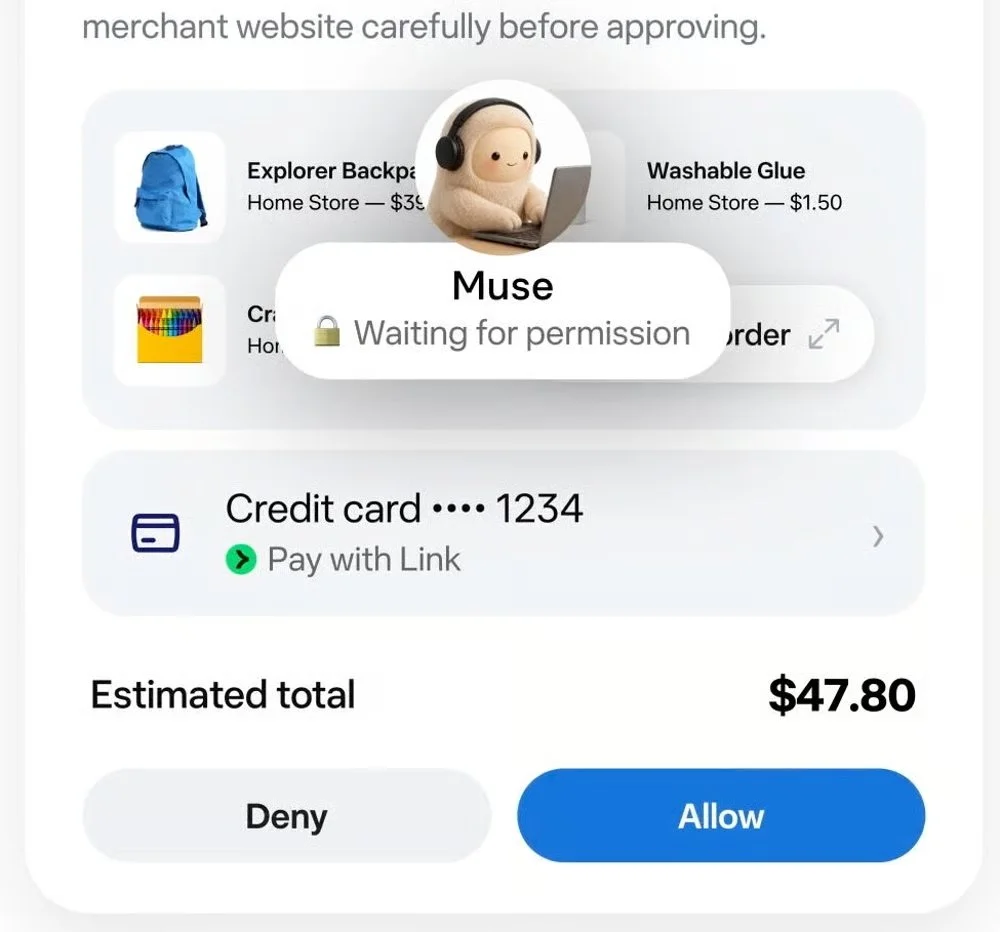
Image source: Meta
Muse is currently available only in the United States and, since 18 September, Canada. Meta has not announced dates for the UK, the European Union, Asia-Pacific or anywhere else. It says only that more countries will follow.
Europe is likely to wait longest. Meta's general AI assistant reached the EU more than a year after its US launch, delayed by regulation, and the company has held back several AI features there while it weighs data protection rules and the new AI Act. An agent that holds people's logins and pays on their behalf will face at least that level of scrutiny.
In Asia, Meta has confirmed no timetable, including for markets such as Singapore where users have asked directly. Yet the region may matter most in the long run. Muse already runs inside WhatsApp, which is the default messaging app across multiple countries. When Meta does expand, the agent will arrive inside an app customers already open every day.
For a brand based outside North America, there are three reasons to care now:
The first is that the channel may already reach you. The rule depends on where your customers are, not where you are. A brand anywhere in the world that sells to customers in the US, Canada or Mexico through Shopify is already inside the Muse channel today.
The second is that Muse is not the only agent. Shopify already sends product data to ChatGPT, Microsoft Copilot and Google's AI Mode. Machine-readable product pages, clear sizing and complete policies help with every one of them, whatever arrives in your market first.
The third is time. US brands are about to run a live experiment through the busiest weeks of the year. Brands elsewhere can watch the results, learn which categories convert and which ones generate returns, and prepare calmly rather than reactively. Fixing your product data costs a few hours now, but fixing it during a launch costs sales.
What it means for the future of fashion
First, a sense of scale. The system is live but young. Shop Pay became available inside Muse on 24 September, there is no public data yet on how reliably it works, and Meta has not said how many people use Muse at all. For most indie brands, agent orders this November will be an experiment rather than a meaningful slice of revenue.
The direction, however, is already visible in the numbers. In the first quarter of 2026, AI-driven traffic to Shopify stores grew eightfold year on year, and orders from AI-powered search grew roughly thirteenfold. Muse is not the start of that trend. It is the moment the trend acquired a checkout. Five shifts follow from it.
1. The shop window moves from the page to the data
For twenty years, online fashion was won on the page a customer landed on: the homepage, the campaign, the product photography. Increasingly, the customer will not land on a page at all. They will describe what they want, and software will shortlist the options. In that world, product data becomes merchandising. Fabric, fit, measurements and stock levels are no longer back-office details. They are the first thing a buyer sees.
2. The internet splits into walled and open
Amazon has now blocked agents from Meta, Perplexity, OpenAI and Google, and it is building its own. Shopify, PayPal and Walmart have chosen to let them in. Fashion brands will increasingly need to decide where AI shoppers can reach them, much as they once decided between wholesale and direct. A brand that sells only through a closed marketplace may find itself invisible to the fastest-growing way of shopping.
For brands off Shopify, the practical question is whether their platform adopts the open standards being built for agent checkout, such as the Agentic Commerce Protocol from OpenAI and Stripe and the Universal Commerce Protocol from Google and Shopify. It is worth asking your platform or developer about them now, before the question becomes urgent.
3. Brand becomes more valuable
When software compares products, it compares on what can be measured: price, reviews, specifications. That pressure pushes interchangeable brands towards competing on price, a race independent labels rarely win. The protection is demand that arrives by name. A shopper who tells an agent to buy "the new drop from" a specific label has already made the decision. Positioning, community and a point of view become the defence against being commoditised by a machine.
4. Fit becomes a competitive advantage
Agents cannot try clothes on, and every wrong size they choose becomes a return the brand pays for. Brands with precise, text-based size guidance, and eventually fit data drawn from their own customers, will convert better through agents and lose less margin to returns. For an industry that has lived with high return rates as a cost of doing business, the agent era makes fit accuracy a line on the profit and loss account.
5. Measurement moves out of the browser
Here's a problem most founders won't notice at first. When someone buys through Meta, ChatGPT or another agent, the tracking on your website never sees it happen. The sale is real, but your Google Analytics won't show it. So get used to checking sales in your store platform itself, not just in your ad dashboards. The brands that make this switch early will know what's actually working. The rest may end up cutting the wrong campaigns.
A growth strategy
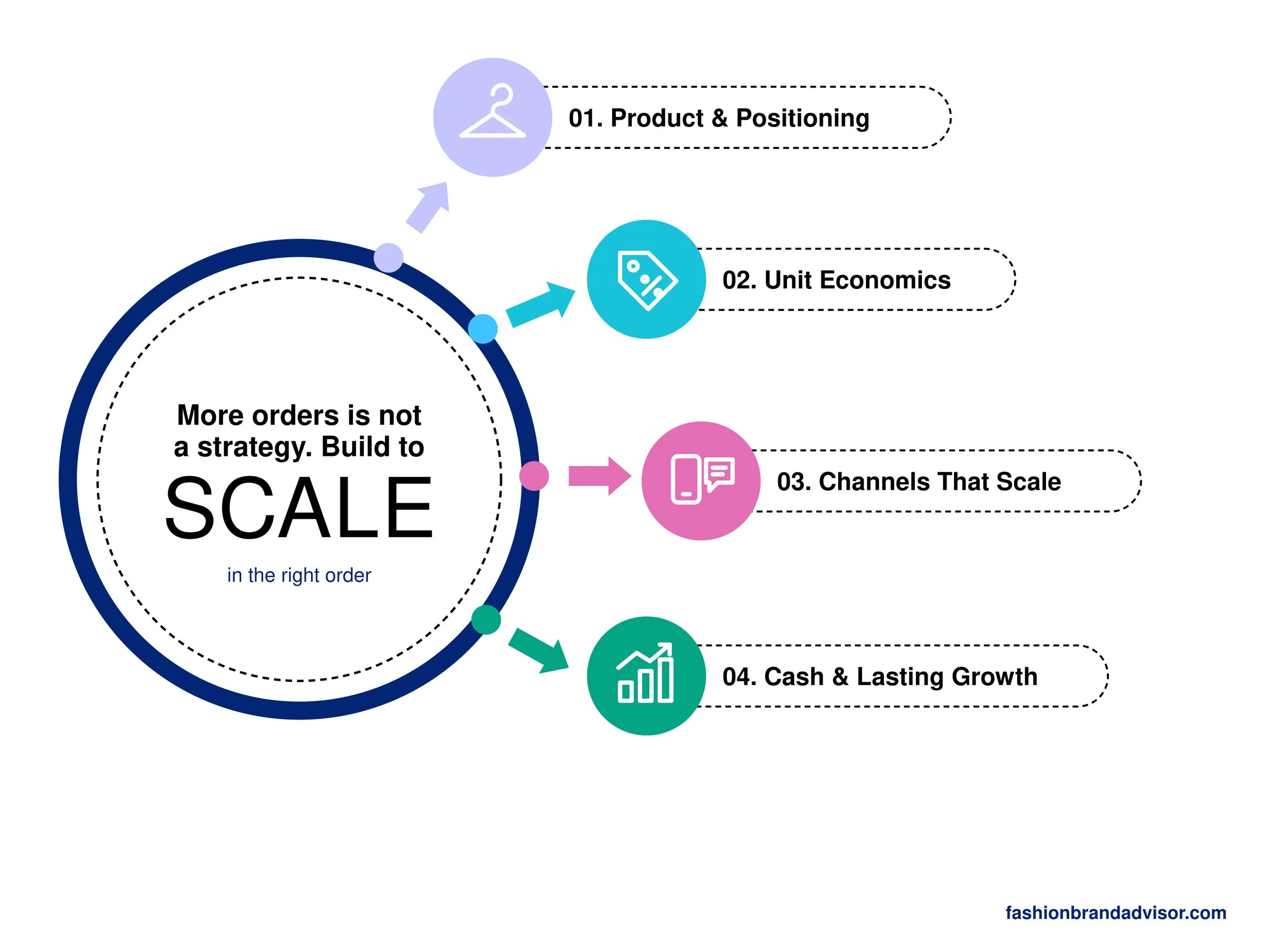
Every new channel arrives with the promise of more orders for less effort, and that's great. But an order an agent brings in is only as good as the business behind it. If your margins are thin, your sizing unclear or your returns high, more orders simply scale the problem faster.
The brands that grow past seven figures are the ones with business discipline, and they make decisions coldly.
So treat Muse as a stress test, not a shortcut. Run the audit, protect your margin, and keep building the kind of brand customers ask for by name. When we run a business, the goal is never just more orders. It is more cash in the business, and growth solid enough to last.
The salesperson you didn't hire has already started work on your store. Make sure it is selling a business built to scale, not just a product that happens to be in stock.
Wondering what this means for your brand? Book a short call to talk through where your business is today, what you're building, and where to focus next.
or contact us