US holiday sales are forecast to pass $1 trillion for the first time this year. In the same week, the average shopper said they plan to spend less than last year. Both are true.
The National Retail Federation forecasts November–December sales up 4.2% to $1.013 trillion. Circana's survey of 3,534 shoppers puts average planned spend at $779, down from $796. About half of NRF's growth is real spending. The rest is higher prices.
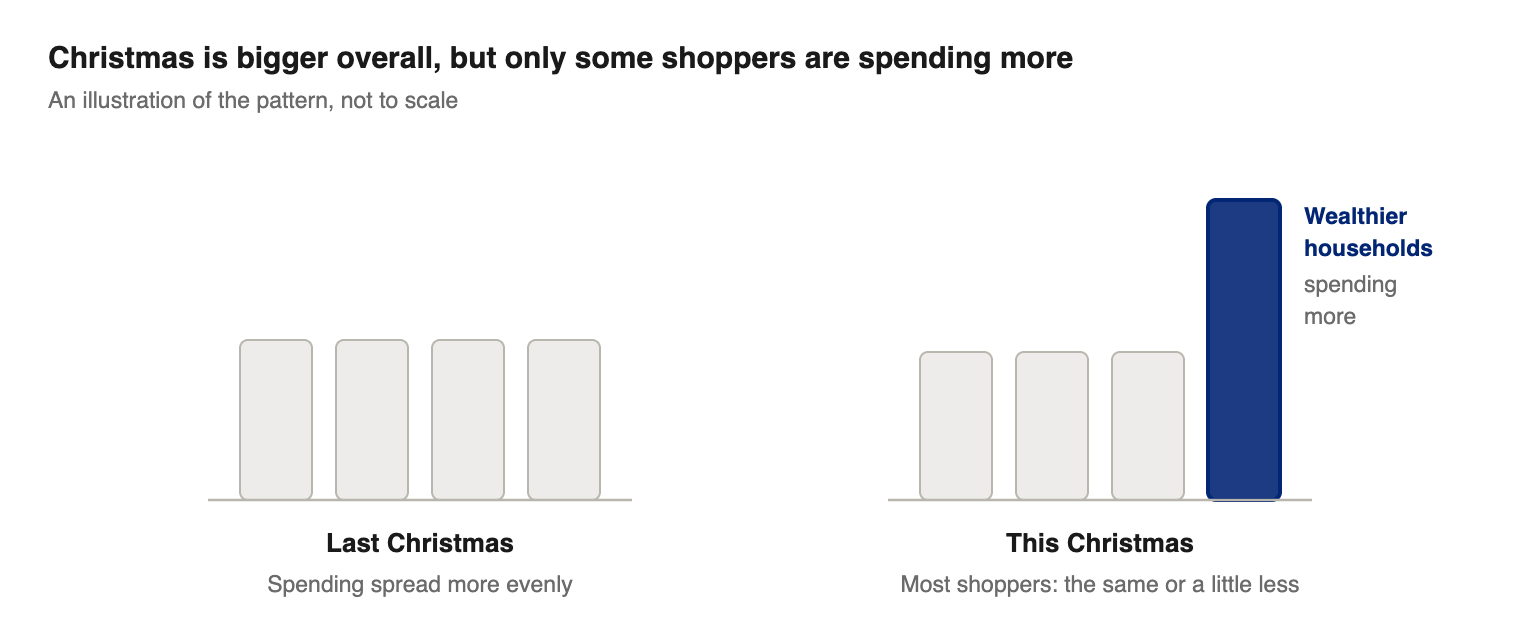
Why US numbers if you sell in London, Milan, Sydney or Seoul? Because the US is the largest and best-measured holiday market, and the same split is showing up elsewhere. In Canada, Deloitte expects holiday spending per person to fall 5% this year, to the lowest level since its survey began. Read the figures below as signals of how customers behave, not as your local forecast.
A bigger total with a smaller average only works one way: some people are spending a lot more, and many are spending the same or less. So the question for your brand is not "will Christmas be good?" It is: who is actually spending this Christmas, and does your customer belong to that group?
This article answers that for two kinds of readers. If you already have a brand, you will get a diagnostic to run on your own numbers. If you are still planning your launch, you will get a simple worksheet to decide who to build for.
Who is actually spending
The data points to three groups, and they overlap. The sources also disagree in places. I'll show you where, because the disagreement is where your own judgement matters.
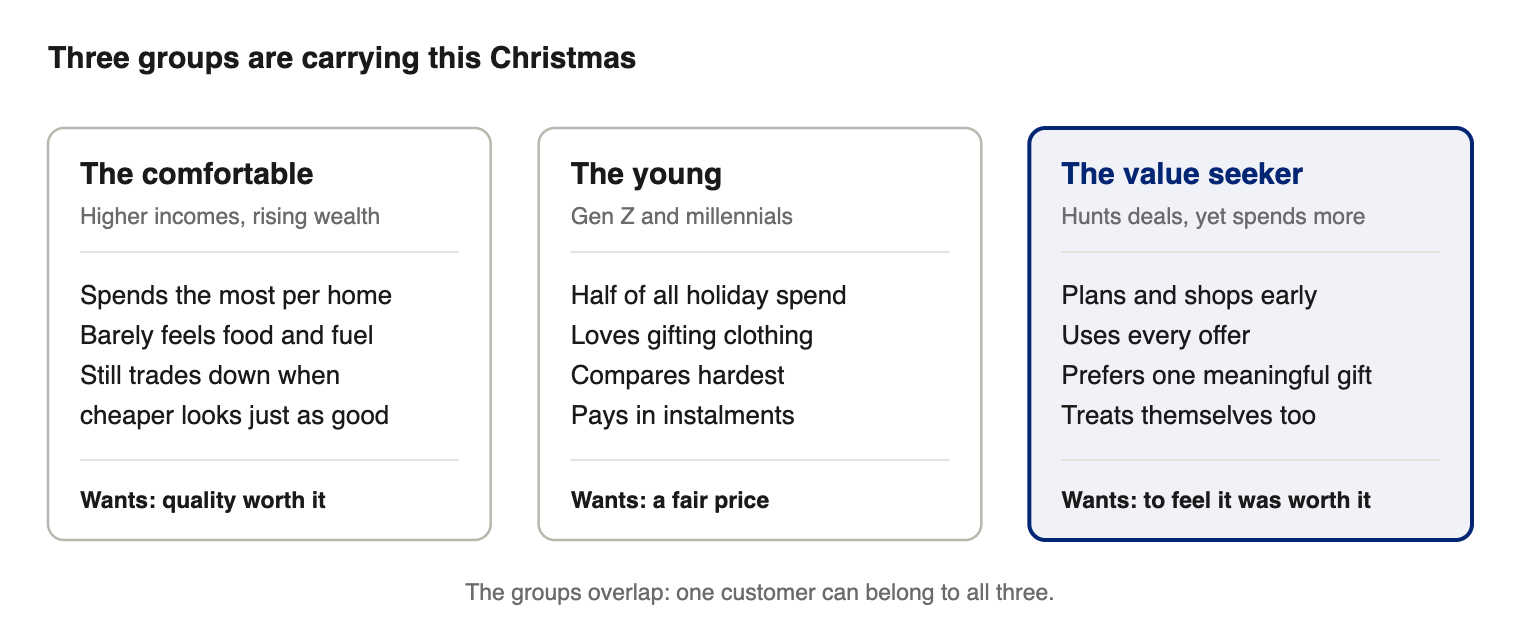
1. Higher-income households carry the season, but the gap is closing
NRF's chief economist expects higher-income households to do more of the heavy lifting this holiday. Higher food and fuel prices squeeze moderate and lower incomes, while stock-market wealth keeps the top spending.
The gap per household is wide. Deloitte's survey of 4,000 consumers finds households earning $200K+ plan to spend more than five times as much as households under $50K.
But actual card data tells a more nuanced story. Bank of America's September data shows lower-income households grew their card spending slightly faster than middle and higher incomes. Only the top 5% grew faster still, and that is easing. Lower-income wages are currently growing faster than everyone else's.
You may have seen the headline that the top 10% make up half of all US spending. Treat it with care. Estimates range from about a quarter to just under half. The honest answer is "somewhere in between, and big either way".
2. Younger shoppers spend more, but hunt harder for deals
Deloitte says Gen Z and millennials will account for half of holiday spending for the first time, and three in four Gen Z shoppers plan to gift clothing and accessories. PwC, surveyed earlier in the summer, found younger shoppers' gift budgets down by about a tenth.
Both can be true. Younger shoppers are spending, but they are the most price-sensitive and the heaviest users of buy now, pay later.
3. The deal hunter is your biggest spender
This is the finding most founders get wrong. Deloitte classes 38% of shoppers as "holiday value seekers" who use five or more money-saving tactics. They plan to spend more than everyone else.
And value does not mean cheap. Nearly half would rather give one meaningful, higher-priced gift than several small ones. Self-gifting is growing too.
What it means for fashion
Clothing is growing slower than retail overall: roughly half the pace in September. Inside that slower category, four signals matter.
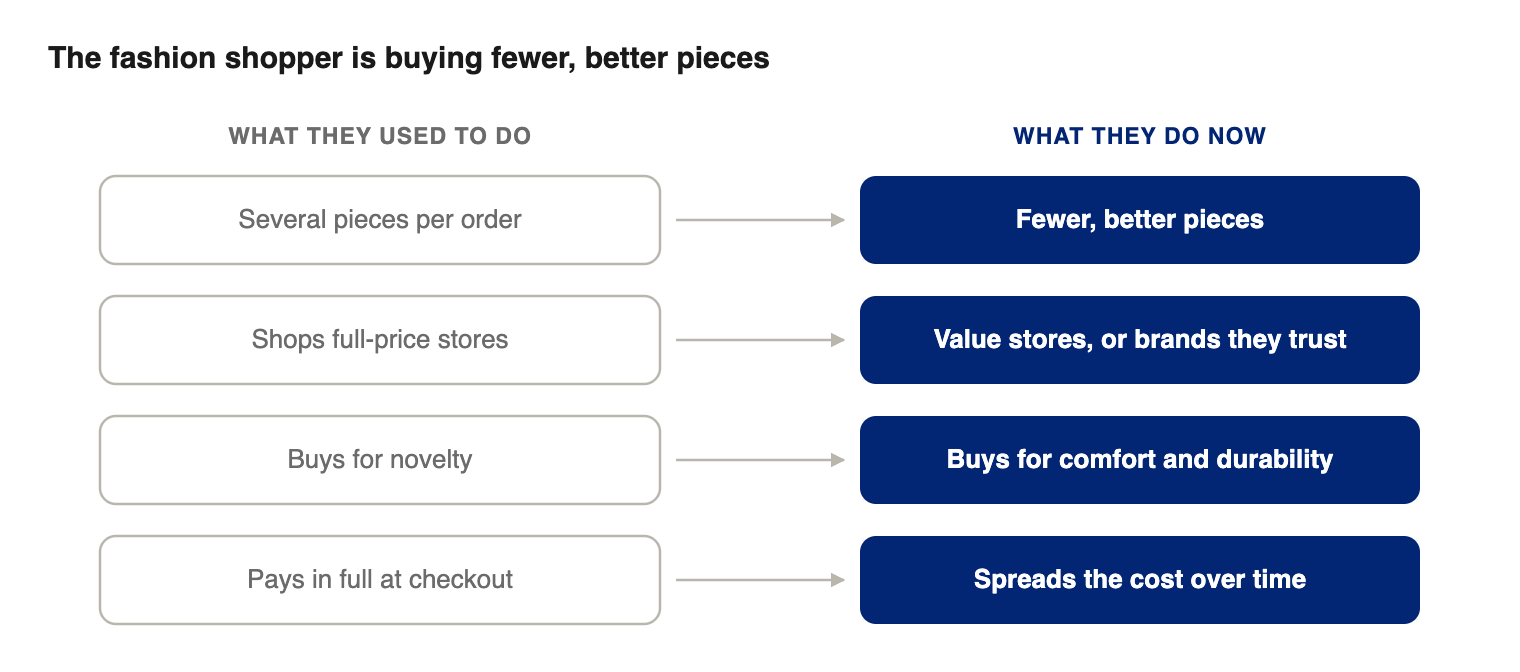
Shoppers are moving to value stores. AlixPartners found trips to value retailers up and trips to full-price apparel stores down.
But they still pay for quality. Many would rather stick with brands they love and buy fewer pieces. Comfort and durability now drive premium purchases more than novelty.
Even the wealthy trade down where quality holds. Your premium customer is comparing you with the good-enough alternative.
Credit is filling the gap. More than a third of shoppers now use buy now, pay later, and close to six in ten Gen Z.
Put together: fashion customers are buying fewer, better pieces, comparing harder, and spreading payments. A brand with a clear quality story and a fair price can win. A brand selling "nice but not necessary" at full price to a stretched customer will feel it first.
The trap
"$1 trillion" is an average across every store in America, from groceries to electronics. It is not your forecast.
The mistake I see most often is a founder reading a good headline and ordering more stock, or reading a bad one and slashing prices. Both decisions are made about a customer who may not be yours.
The national numbers tell you which groups are spending. Only your own data, or your own research if you haven't launched, tells you which group you sell to. Get that right first, and the stock, discount and cash decisions follow.
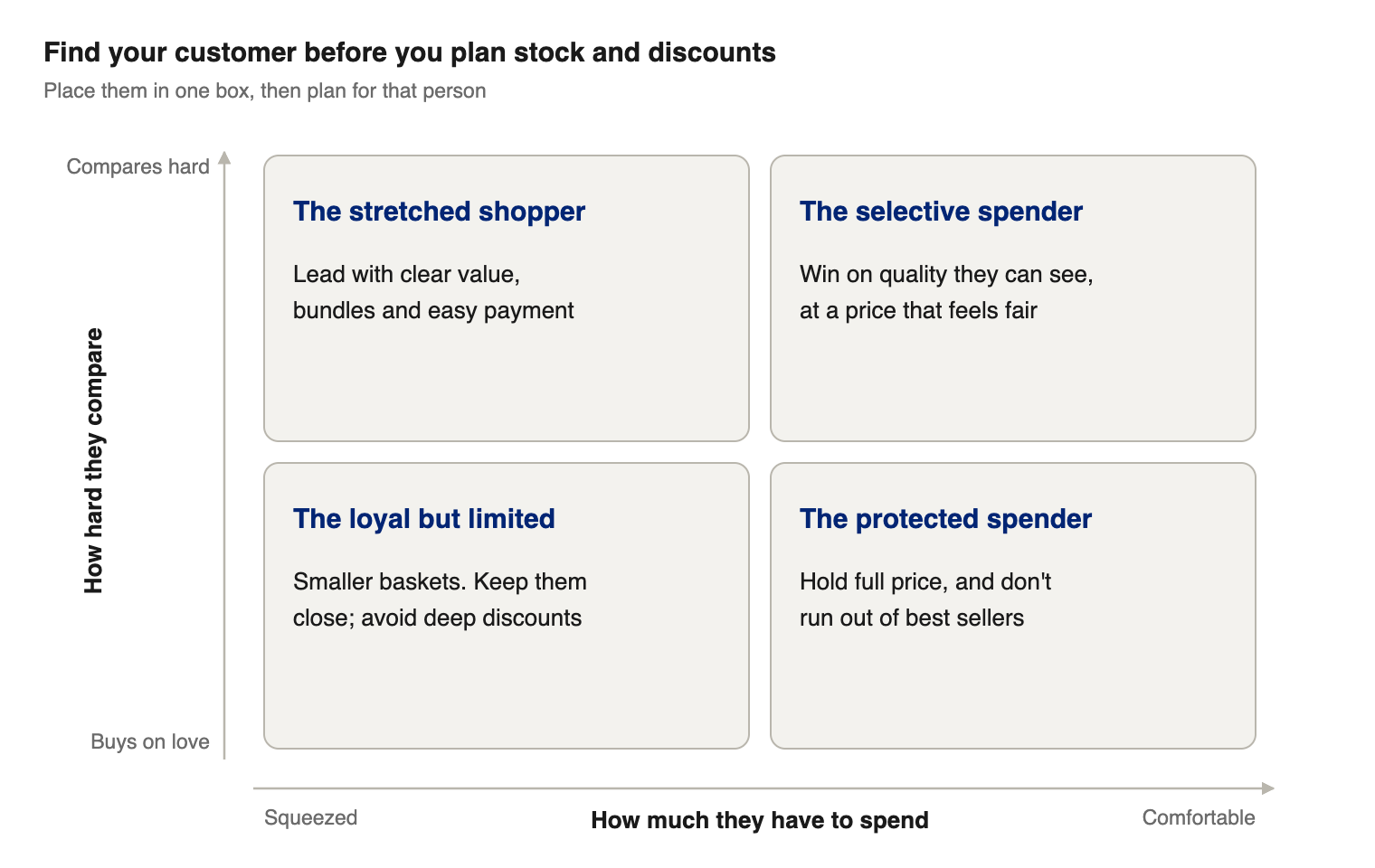
If you already have a brand: check before you buy and discount
You have data, so use it. Before you confirm Q4 reorders or plan your Black Friday offer, answer these questions from your last 12 months of orders:
Is your growth real or just price? Compare units sold with revenue. If revenue is up but units are flat or down, your customer is buying less and paying more. Plan stock on units, and treat last year's units as the ceiling.
Who is your customer by income? Your average order value, your price points and where your orders ship give you a strong clue.
Do your discount buyers come back? Value seekers spend more, but only if they return. Compare the repeat rate of customers whose first order was discounted with those who paid full price.
Are gifts or self-purchases driving your Q4? Gift buyers need a reason to choose you over a value store. Self-gifters need permission and a quality story.
How much of your revenue is on buy now, pay later? A rising share is an early sign your customer is stretching.
I've turned this into a step-by-step diagnostic with a scorecard and "if this, do that" actions for stock, promotions and cash.
If you are launching: choose your customer on purpose
If you are at idea stage or launching next year, this data is a gift. It tells you which customers have money and which are cutting back, before you spend on samples and stock.
Pick a customer who can afford you, then prove it. Don't design for "women 25–45". Name the person, their income level where they live and what they spend on clothing today.
Your customer will compare you with a cheaper option. Before launch, write down in one sentence why your product is worth more than the good-enough alternative.
Start small on stock. A record total does not mean a record for a new brand. Launch with fewer styles and less depth, sell through, then reorder.
I've made a worksheet that walks you through this in about 30 minutes, no data needed.
What to watch through December
Early November: your units against last year, not just revenue. Many shoppers spent early this year, so a slow November may be early spending, not lost demand.
Black Friday to Cyber Monday: most shoppers plan to wait for these sales, in the US and increasingly worldwide. Watch how much of that week's revenue comes at full price.
December: sell-through by style. Reorder only what is selling at full price. Discount early on what isn't, rather than holding it into January.
The brands that do well this Christmas won't be the ones with the most stock. They'll be the ones who know exactly who is buying, and plan for that person.